10/10/2025
Gino found a new beginning with Krist from Nirvana and Jello Biafra
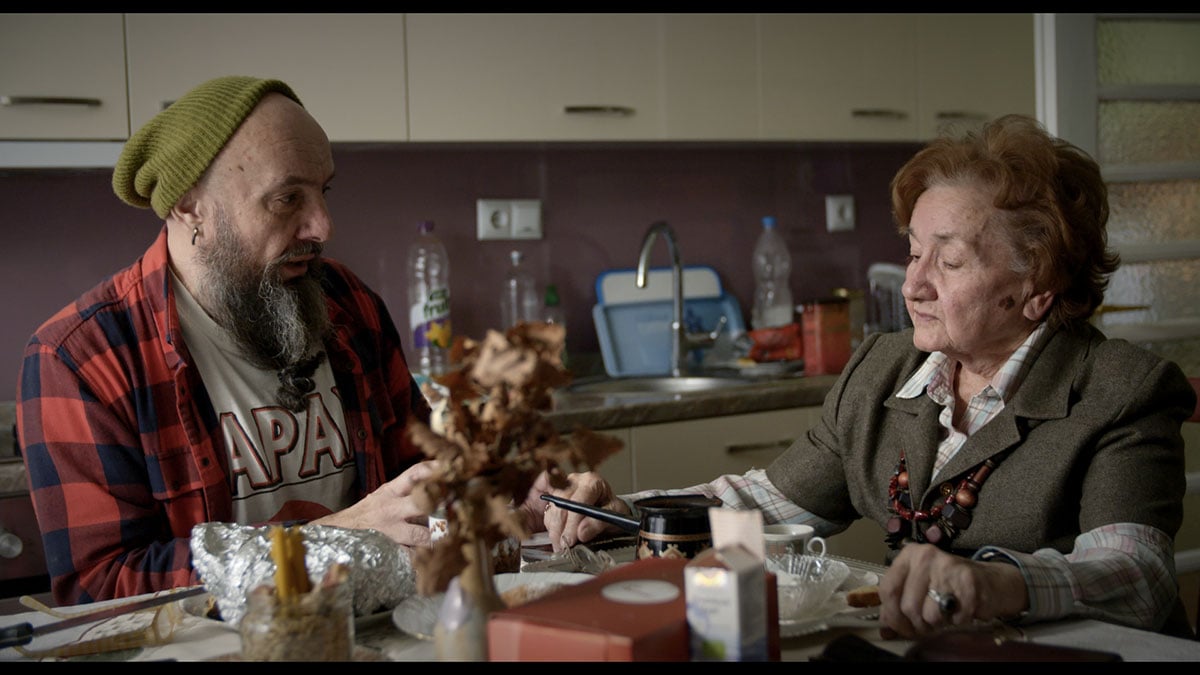
At this year’s Mediterranean Film Festival in Široki Brijeg the audience will have the opportunity to see the documentary “Grandpa Guru” – a touching story about the life, music, and spiritual journey of Srđan Gino Jevđević, frontman of the legendary band Kultur Shock. We talked about the origin of the idea, the filming process, and the challenges in conveying a layered artistic and human story, with the film's screenwriter Sanjin Hasanefendić, who, together with the director Silvio Mirošničenko, co-created this inspiring portrait of a musician whose life and work are marked by the search for freedom, identity, and home.
How did the idea for the film “Grandpa Guru” come about and what drew you personally to the story of Srđan Đino Jevđević?
The idea for the documentary “Grandpa Guru” was born at a concert of Gino’s band, Kultur Shock, at the Močvara club in Zagreb back in 2015, where I was involved as one of the organisers. His story was very interesting to me for some time, and I thought that someone should finally share it with the public. Even though I come from Sarajevo, just like Gino, we didn’t know each other well before. Later on, we realised that, regardless of the age difference, we had grown up just a hundred metres apart in the legendary Grbavica neighbourhood, attended the same elementary school in different periods and had gone through quite similar life experiences. We quickly became true friends, and our friendship continued at many concerts and meetings before the start of filming and continues to this day. Not long after the initial idea for the film “Grandpa Guru”, Silvio Mirošničenko joined us as co-writer and director, and together we began having ongoing conversations with Gino and the members of Kultur Shock about the documentary. Gino’s life, music, and art were a constant source of inspiration for us, and a reminder that nothing in life is impossible and that everything can be achieved with enough passion and courage. That message is what truly drew us in and solidified our decision to make this film. Moreover, I believe this isn’t a typical music documentary, but rather a deeply personal and emotional story in which many people can see themselves, not only in Bosnia and Herzegovina, Croatia, and the region, but all over the world, especially those who have lived through similar life challenges and fateful circumstances as our main protagonist, Srđan Gino Jevđević. “Grandpa Guru” is a story about accepting one’s own imperfection and a continuous search for one’s personality, including topics that concern us all in some way.
We follow not only the music career, but also the personal transformations of the protagonist in the film. How challenging was it to dramaturgically balance these intimate layers with the concert and artistic material?
"Grandpa Guru" is a depiction of Gino's free spirit that went through the turbulence of war trauma and the search for musical and personal identity, while his past, present, and future, all together, make up this documentary story. In the film, we have a very specific spiritual journey, which is not trivialised at any moment, but is deeply emotional and psychologically authentic and even dramatically presented. Along with Gino’s intriguing and distinctive charisma and character, it is precisely this spiritual journey, his transformations, his relationship with his mother and family, music, art, his eternal love for Sarajevo and Seattle, as well as his constant search for the “house of the sun,” representing the ultimate place of happiness he is searching for, that form the backbone of the film, which ultimately comes from the portrait of a charismatic musician. On the other hand, we are also presenting a strong sociopolitical and cultural story that runs throughout the entire film, and which is quite relevant even today. It was very challenging to dramaturgically balance all these intimate layers with the concert and artistic material, but thanks to our creative team, ideas, energy, and especially the incredible creativity of our director of photography Almir Đikoli, and editor, Doris Dodig, I think we definitely succeeded.
How did you approach depicting Gino’s meeting with Krist Novoselic from Nirvana and Jello Biafra – and to what extent were those moments and his meetings with numerous musicians in Seattle a turning point in his decision to continue pursuing music?
Jello Biafra, Krist Novoselic, Billy Gould from the cult band Faith No More, as well as, even before Gino arrived in the U.S., the renowned Hollywood screenwriter and director Phil Alden Robinson and the legendary Joan Baez – all of them, in their own unique ways, were important turning points and special sources of motivation for Gino’s decision to keep making music. Personally, I believe that despite how terribly difficult those war years were, and even after he departed from Sarajevo to distant Seattle, Gino never gave up on his music and art. From the wartime Sarajevo production of “Hair” to the first lineup of Kultur Shock in America, he has always been a sincere musician and artist who, from the depth of his humanity, believes in what he does and creates. We filmed “Grandpa Guru” in Sarajevo, Zagreb, Pula, Seattle, New York, New Jersey, Philadelphia, San Francisco, and Los Angeles. Alongside Gino, the documentary features 43 other protagonists who are exceptionally important figures in his life and for this story. During production, we received great support from all former and current members of Kultur Shock, Gino’s family, and all the close friends and collaborators who appear in the film. They all know and appreciate his work and the music of Kultur Shock very well, and they share interesting and deeply insightful opinions about it, so it’s best that you see it for yourself in the film.
To what extent has your own experience in music and art influenced your approach to writing the script?
I think that my own experience in music and art has influenced the approach to script writing and the production of the film a lot. Since my earliest childhood, my entire life has been intertwined with music and art, and I have no intention of changing that. I have had the privilege of taking part in the organisation of a large number of concerts and music festivals, including concerts by the band Kultur Shock. From the very start of writing the script and making the film, I was aware of the great challenges. Co-writer and director Silvio Mirošničenko and I have, from the very beginning, absolutely believed in our concept of a portrait documentary that, through an eclectic punk style and approach, depicts the exceptionally interesting life of one of our musicians, perhaps even in a way similar to how Kultur Shock’s music, in its unique, collage-like and diverse manner, portrays their lyrics, messages, and ideas. This eclectic screenwriting and audiovisual style was extremely important to us, and we’re happy that we managed to achieve it.
The film has had a very vibrant festival life – from ZagrebDox to Seattle, Sarajevo, and Belgrade. What audience reactions or criticisms have remained most memorable to you?
The audience's reactions are very emotional and beautiful, and for me personally, the most special was the wonderful reaction of the audience in Sarajevo at the SFF, where we all had the most justified nervousness, which is, of course, understandable. I honestly don't really read any official reviews. As an author, the most important thing for me is that the audience is satisfied after watching "Grandpa Guru" and that with this film, we have at least slightly, if possible, moved some invisible boundaries that surround us every day and encouraged positive thinking, especially among young and creative people who listen to good music.
To what extent is an international perspective important for a story like this, about a band that originated in our region and has built a career worldwide?
To answer this question, I would first mention the position of music documentaries in the region, which are currently perhaps among the most-watched documentaries. In order to successfully promote a music documentary with a local story on the international stage and have it screened around the world, I believe it is essential, not only to have a good story, of course, but also to have the support of our regional festivals and, in particular, cinemas. We are very happy that "Grandpa Guru" has continued to have an excellent film journey at festivals and in cinemas since its world premiere in Zagreb, so we have been on "tour" for eighteen months now, while it would be truly phenomenal in the future if there were even more possibilities and opportunities for screening and promoting upcoming regional music documentaries that we look forward to seeing.
The documentary talks about the "demons" that follow the main protagonist. How did you decide to shape that layer of the story and convey it to the viewers?
Ever since early childhood, there has been a certain “demon” within Gino that has followed him throughout his entire life. Gino says in the film, "My demon made me talk about myself for twenty-four hours," and through that line, we can actually understand the essence of the film "Grandpa Guru." Gino's demon always wanted albums to sell, for everything to be commercial and recognised by critics and the audience, for him to be very successful, but the big question is how happy was Gino really with that? The victory over his "demon" is a certain moment of accepting his post-trauma, which we wanted to convey to the viewers.
Is the main protagonist of the film satisfied with what was shown, what were his actions?
Gino clearly told us at the very beginning that he doesn't really believe in documentaries about musicians and artists, but we were impressed by one important question he asked: would we tell a story about the horrors he goes through every day, and not just him, which we really liked. After that question, everything somehow changed, the story opened up, as did all subsequent conversations about his life. After the first viewing together, I got the impression that he really liked the film, which he confirmed with a very nice reaction after the screening. It was a special evening for our film crew. It’s not easy to be completely exposed with such honesty on the big screen in front of everyone, and after this major experience, I definitely understand that. It was essential to us that we managed to overcome all the challenges we faced during production and create a ninety-minute documentary film about an extraordinary musician and artist from our region.
Are there any interesting facts from the shoot?
There were many interesting anecdotes and moments during filming, but shooting across the United States was especially memorable. I would perhaps single out the shoot at the famous “Rocky” steps in Philadelphia, surrounded by curious tourists, as well as the conversation with Billy Gould in the legendary studio in Oakland where his cult band recorded its first three iconic albums.
What would you like the audience to take away from the cinema after watching the film – a message about art, about life, or maybe something else?
It’s interesting how, at the screenings of “Grandpa Guru”, you can see a lot of young people who understand Gino’s messages and the essence of Kultur Shock, their fan base never declines, it only continues to grow. People understand their messages, especially in these rather complicated times and sociopolitical circumstances we all live in. That is perhaps the most important thing for us. To conclude, I’d like to highlight one important fact: Gino and Kultur Shock are, without a doubt, a musical machine that never stops, and they prove it with every new performance.