20/09/2026
From Cannes and Berlin to Sundance winners, audiences will get to see true cinematic gems
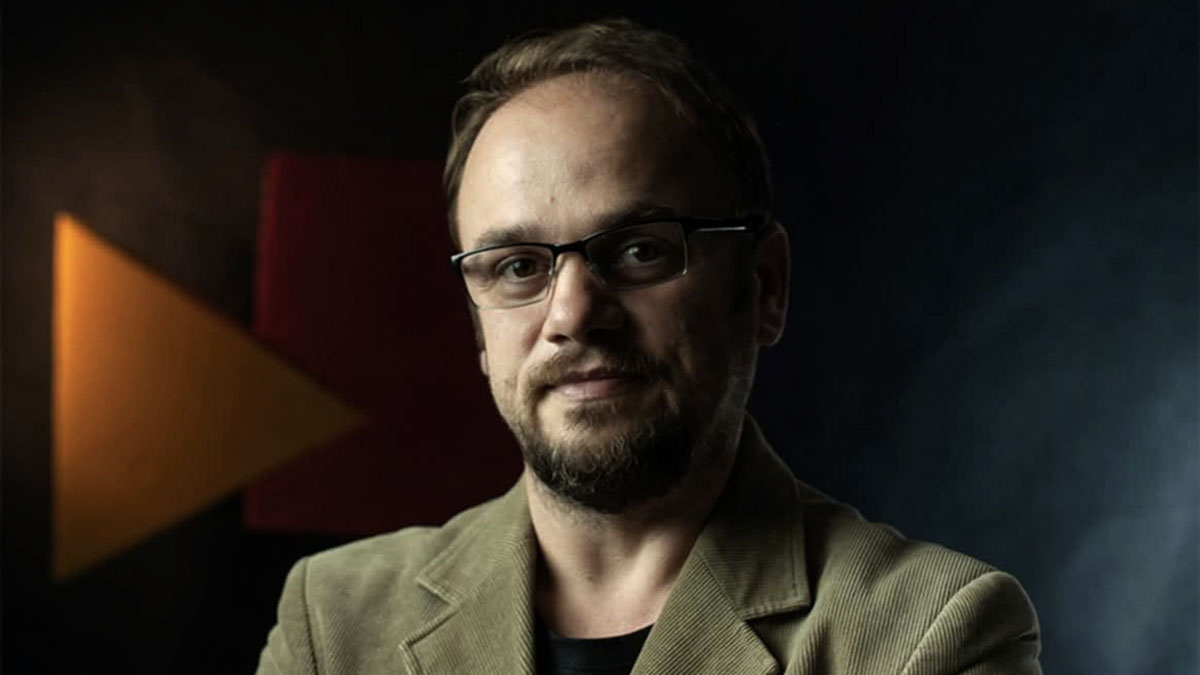
For almost three decades, Tomislav Topić, director of the Mediterranean Film Festival, has been the driving force behind the film story that has placed Široki Brijeg on the region’s festival map. As the 27th Mediterranean Film Festival approaches, taking place in Široki Brijeg from September 23 to 26, he looks back on the festival’s beginnings, the big names that have passed through it, talks about this year’s programme, the future of domestic cinematography, as well as his own directing projects.*
When you look back at the beginnings of MFF, what is the first thing that comes to mind – is it a screening, a guest, a film or maybe a situation that you couldn’t have believed would happen at the time?
When I think back to the early days, the first thing that comes to mind is the guests we hosted – film greats such as Dr. Ante Peterlić, Petar Krelja, Zoran Tadić, Vlatko Filipović, Tomislav Radić, and Asaf Džanić. Unfortunately, all of them are deceased. And then, numerous other guests from the world of culture – Krunoslav Cigoj, Ibrica Jusić, Željko Bebek, Dimitrije Popović, Josip Mlakić, Anja Šovagović, Vinko Kraljević, Vera Robić Škarica, and many others. Over the years, the MFF has hosted a succession of filmmakers and creators from the younger generation, including Zrinko Ogresta, Zdravko Mustać, Boris Poljak, Ognjen Sviličić, Vinko Brešan, Pjer Žalica, Damir Čučić, Srđan Vuletić, Jasmila Žbanić, Dean Aćimović, Antonio Nuić, Jovan Marjanović, and numerous others, to name but a few. John Cooper, the director of the Sundance Film Festival, also visited us with his team in 2013, alongside a multitude of directors and filmmakers from the Mediterranean countries. Fortunately, we have a publicly available archive on our website, so even today we often return to those photos and remember those people and times. It is also interesting that we were among the first in the Balkans to have digital screenings. At first, honestly, we didn't think much about what would happen in five, ten, or twenty years. We had the idea to start the film festival in Široki Brijeg, and we just went for it. Everything else happened along the way. Today, for example, we have a digitised and modernly equipped cinema with excellent conditions for film screenings, something that was hard even to imagine back then.
Given the experience you have today, is there anything you would do differently or introduce to the MFF that you weren’t able to do before?
I would definitely do some things more simply today. When you are young, you have the energy for everything, and you think that everything has to be grand, special, and complicated. With time, you realise that the most important thing is for the festival to have good films, a nice atmosphere, and for people to feel good there. I wish that, during all these years, we could have invested more in film production itself, that is, in domestic authors and their projects. But that requires a different funding system and much greater continuity. We have always been quite limited in this regard by the way culture and film production are funded. I believe a festival like MFF could be even more than just a place where films are screened; it could also be a place where films are created.
What can still surprise you at the festival today? Do things still happen that you couldn't have predicted, even after nearly three decades of experience?
Of course. A festival is a living organism, and something always comes up. You can make a plan down to the last detail, and then something happens that you just couldn’t have foreseen. For instance, on the very day the festival was set to open, a Day of Mourning was declared in the Federation of BiH, so at one point we had to reschedule everything and push the program back by a day.
What is this year’s MFF program like? Are there any specific films or titles you would single out, and why?
I wouldn’t like to single out any specific film, in order to be fair to all the authors, but I can say that this year’s program is truly excellent. We have films that have been screened at major festivals like Cannes, Berlinale, IDFA, Sarajevo, films produced by James Cameron, as well as those originating from the Werner Herzog Foundation. We have the winner of the Sundance Film Festival international documentary selection in our program. Each of these films is special in its own way, whether through its storytelling, structure, or the very approach to the theme. There are some true cinematic gems among them, and I think the audience will have plenty to see this year.
Although you have been fully dedicated to the MFF for nearly three decades, you are, first and foremost, a director. What are you currently working on, and are there any of your own projects that you could reveal to us?
The festival has “consumed” a lot of time, but I haven’t stopped thinking as a director. I like making biographical documentaries, so I am currently in pre-production on two films. One is about the archaeologist and conservator Đuro Basler, and the other is about Josip Slišković, a pioneer of radio and television technology in Austria and beyond. Considering the state of cinematography, and the way films are financed today, it's hard for me to say when I'll finish them. But the projects are there, and I hope that the time will come when we will be able to carry them out properly.
When discussing film in Bosnia and Herzegovina, we often speak of a paradox: we have filmmakers and films achieving great international success, yet at the same time, we lack a sufficiently stable system to ensure continuity in production. In your opinion, what is it that we lack the most?
What we lack the most is continuity. We have the talent, the authors, and people who know how to make a good film. This is constantly being confirmed at festivals around the world. But the film industry cannot live off enthusiasm and occasional projects alone. There should be a system in which the producer, director, screenwriter, and the entire crew can plan for several years. Today, you make one film, and then you don’t know when you will be able to make the next one. Another issue is that there is often insufficient funding for the state to cover a film's entire budget on its own. Therefore, it is necessary to find other financing models and attract more co-productions. We have the people and the expertise; we simply need a more stable system that enables them to work continuously.
Today, Široki Brijeg once again has a cinema that operates beyond the festival itself. How important is it to you that film is no longer tied exclusively to four days of the festival, but is once again finding its place in the everyday life of the city?
I think it is perfectly normal for every city to have a cinema and regular film screenings. A cinema shouldn't come to life only during festivals; it should be part of the city's everyday life. This is particularly important for young people, as going to the cinema is part of film and media culture. I would like to see one day a week set aside, alongside the regular program, for art films, documentaries, and films that otherwise struggle to reach an audience. In this way, the cinema would fulfil another important role: introducing audiences to different types of film.
At this year’s MFF, we are also watching Zdenko Jurilj’s “Follow Me with Your Heart”, which shows that films are not only watched but also created in Široki Brijeg. Do you see enough space today for a new generation of local filmmakers to develop?
I think that young authors are already here. We have, for example, Tvrtko Bubalo, who has already made a serious short fiction film and presented it at a festival, as well as Tvrtko Karačić, a master of animation. Other film-related activities have also developed through our MFF School workshop, which became independent after ten years and now operates under the name Wandering Film School. These are things that typically happen in major film hubs, yet Široki Brijeg is something of an exception in this regard. I believe that through the MFF, we have created a space where young people can take their first steps and see that films can be made here, too, not just somewhere else.
Zdravko Mustać was one of the people whose passion for cinema, taste, and sensibility had a profound influence on MFF. What did you learn from him as a selector and film connoisseur, and what will you personally miss the most now that he is gone?
Zdravko had something very difficult to learn – a genuine cinematic instinct. He didn't need much time to explain why a particular film was worthwhile. He had his own taste and knew exactly what he was looking for. He was a rare kind of film connoisseur, a kind of living encyclopaedia of cinema. There was hardly anything about film that he didn't know. I learned from him not to underestimate the audience, nor to pander to them. If a film is good, the audience will recognise it. And through different and alternative ways of film storytelling, one can also learn something new. I will miss our conversations about films the most. Sometimes we got along, sometimes we didn’t, but there was always something to talk about. That is perhaps what best described Zdravko – his vast knowledge and his need to share that knowledge with others. I will miss him both as a person and as a film expert. He left us too soon.
After all these years, what brings you more joy – when an author you’ve known for years returns to the Festival, or when you discover a completely new name that you feel could become significant?
A new name, definitely. Of course, it’s nice when someone you’ve known for years comes back. It’s like running into an old friend. But when you watch a film by a completely unknown or new filmmaker and think, "Wait, this guy really has something," that is a special pleasure. It is because of moments like that that I continue to watch films with the same curiosity I had at the beginning.
Is there a moment from these 27 years of the MFF that still comes to mind today, making you think: "This is what made it all worthwhile"?
There are several. But perhaps what I love most is seeing people who used to come to MFF as kids now bringing their own children to screenings in the MFF Fora program. That's actually the best proof for me that the festival wasn't just four days of screenings. If it stays in someone's memory as part of growing up and they are now passing it on, then this is something valuable.
When there is no festival, no deadlines, and no one is asking anything of you, what kind of viewer are you? What do you watch when you choose a film just for yourself?
I watch current films from major festivals and TV dramas, but also old black-and-white movies, and films from virtually every national cinema in the world. So much is available to us today that it would be a shame not to take advantage of it. There is still so much we haven't watched, and those discoveries are a special pleasure. Most recently, I watched a new film about Odysseus, but also the old 1955 film “Ordet” by director Carl Theodor Dreyer. There is always something good to watch. And it’s also nice when someone recommends a film you might never have found on your own.