The film “Fox
Under a Pink Moon”, an intimate and moving story by young Afghan woman Soraya
Akhlaghi, who serves as both protagonist and co-director, will be screened in
competition at the 27th Mediterranean Film Festival in Široki Brijeg. Through
her own footage, drawings, and personal testimony, the film addresses violence,
attempts to escape, and the loss of freedom, while also highlighting the power
of art, dreams, and the persistence required to forge a life of one's own.
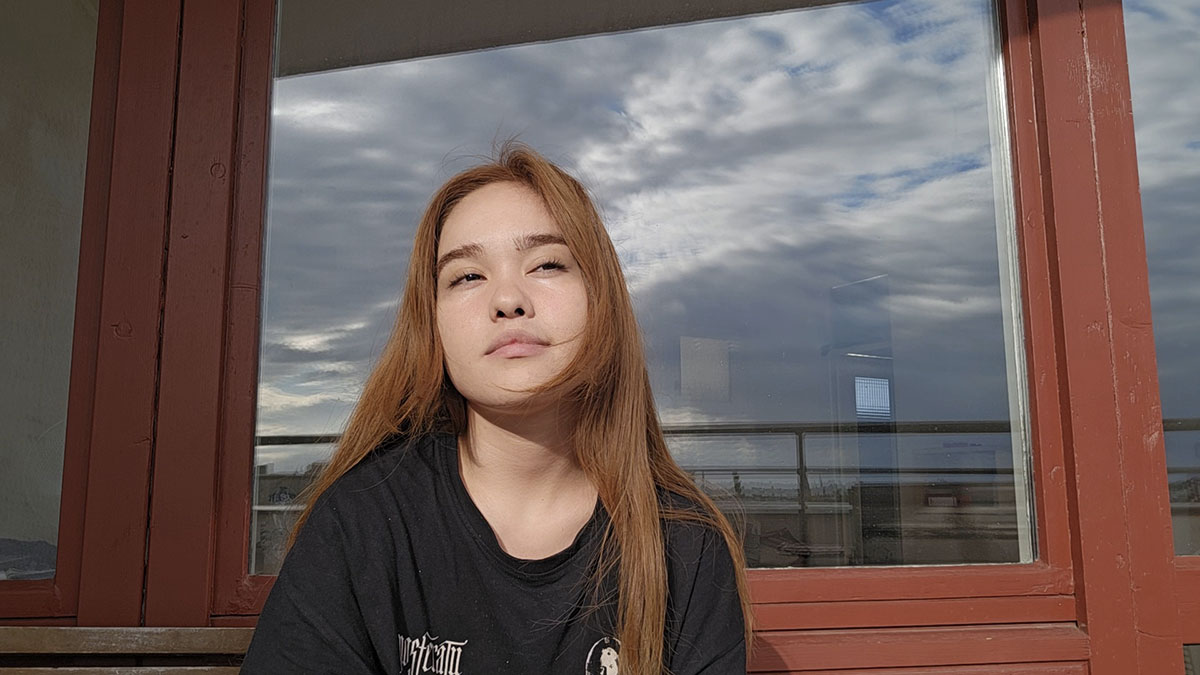
Soraya Akhlaghi currently lives in Berlin, where she pursues art and is still
navigating the asylum process. We spoke with her about the film, violence,
freedom, art, identity, and life after everything she has endured.
How did you decide to put your own life in front of the camera while also taking part in shaping the way your story would be told?
At the beginning, it was very difficult for me to bring my life in front of the camera. I would often delete the footage I had recorded. But little by little, the camera became like a close friend, almost someone I could confide in. I would sit in front of it for hours and talk, and afterwards I often felt as if a heavy sadness had been lifted from my shoulders. Over time, I began to take the filming more seriously. I felt that I was not only speaking about myself, but that I could also become a voice for other girls from my country. I often thought that many of them were going through even more painful experiences than mine, and that these stories should not simply be ignored. I hope, in some small way, I have been able to give them a voice.
Did making
the film give you a sense of control over your own life at a time when, in
reality, you had very little control over it?
Yes, I felt
that I had control over my mind, and I believe everything starts with the mind.
The film is
deeply personal, but it does not portray you only as a victim of violence. We
see you as an artist, a young woman who draws, dances, sings, and dreams. How
important was it for you that audiences get to know this side of Soraya as
well?
Since this
film was the reality of my life, I could not hide who I really was. I was not
only someone experiencing violence. I was still myself – an artist, a young
woman with dreams. And of course, no one should ever have to experience
violence. If I am honest, art was one of the ways I could take my mind away
from pain and suffering, even for a while. It gave me a place to escape to.
Everyone has dreams, and I wish everyone could have the chance to make their
dreams come true, especially the girls of my country. I think they are all
artists in their own way. They know the art of enduring, surviving, and continuing
to fight despite so much pain and so many obstacles.
Your
drawings and the animated world of the Moon, the fox, and the clown become a
kind of refuge from reality. What do they represent to you, and were there
things you could express through art that you could never have put into words?
All of
these characters represented parts of me that made me feel less dependent on
other people. The fox was clever and understanding. I felt I could talk to him
about my problems, ask for his advice, and let him guide me. The moon was my
dream. I could see it far away, but its light still reached me clearly. I
always believed that one day I would reach it. And the clown was the character
I felt closest to. No one asks a clown how they truly feel. People only expect
a big smile from them.
The film
does not hide the violence you experienced.
We see your bruises and hear your screams. How did you decide how much
of your pain you wanted to share with the audience, and how much you wanted to
keep for yourself?
My
co-director and I decided to show the violence only to the extent that a person
can bear to watch it.
Your
situation with official documents almost sounds like a vicious circle – in
order to obtain one document, you need another, but you cannot obtain the
second without the first. How do you preserve a sense of identity when
institutions themselves seem to deny that identity?
I cannot
ignore my identity. When I hear traditional Afghan music, I think of my father.
When I see the beauty of Afghan traditional clothing, hear the beautiful accent
of my country, see the greatness of the Buddhas of Bamiyan, or see the
awareness and strength of the girls of my country, I feel more than ever that I
want to show who I am and where I come from.
The film
interweaves news about political events in Afghanistan with your intimate
story. Why was it important for you to connect what is happening at the level
of a country with what is happening inside one home?
This was mainly
Mehrdad Oskouei’s decision. In his films, he often works with two parallel
lines: one follows what is happening in the outside world through news and
political events, and the other follows what is happening in the personal life
of the film’s character. For him, bringing these two lines together is
important because it gives a fuller context to the story and helps the audience
understand the character’s experience more deeply.
Today,
Afghanistan is often portrayed through political news, statistics, and images of
the Taliban. What would you like people who have never lived through your
circumstances to understand about the life of a young Afghan woman that cannot
be conveyed through the news?
When we
hear about Afghanistan, we often hear about girls being banned from school,
forced and child marriage, and unemployment. But I think domestic violence is
discussed much less, even though it can be one of the most painful realities in
a woman’s life. A woman may have very little right to express her opinion, both
inside the home and outside of it. She can suffer in both spaces – at home
through violence and control, and outside through restrictions on her freedom,
work, movement, and independence. Violence inside the home, having very little
say over your own life, and feeling that there is no way out can push a person
to a very dark place. Divorce can also be extremely difficult for women, and
even after leaving a marriage, many women may still have very limited
possibilities for living independently. I experienced domestic violence myself,
so I know how a person can slowly reach the limit of what they can endure. Human beings can adapt to many difficult things, but I do not believe
anyone should ever be expected to get used to violence or to living without
their most basic human rights.
You spent
five years trying to find a way out. What was harder, the actual attempts to
escape, or maintaining hope after every failed attempt and every return?
The hardest
part was not knowing whether, after all that effort, I would ever actually make
it, or whether there was really any hope. It felt like being a prisoner who
does not know how long they will remain behind bars. Sometimes the uncertainty
itself is more painful than the waiting. Even if someone were told they would
be free after eighty years, at least they would know that one day freedom would
come. For me, not knowing if that day would ever come was the hardest part.
At one
point, Europe represented almost a kind of “Eden” to you. Is it still a symbol
of freedom, or has your view of Europe changed?
I know that
life itself has become difficult in today’s world, and I never really believed
that Europe was a paradise. That was not how I saw it. For me, what matters is
that today I have the freedom to make decisions about my own body, my feelings,
my thoughts, and my life. That freedom means a lot to me, and I am grateful for
it. I have also learned that paradise is not something you simply arrive at.
You have to build it for yourself through effort and persistence. But I am
happy that I no longer have to live according to someone else’s outdated
beliefs. And I believe that a woman can create her own kind of paradise
wherever she is, if she is simply given the freedom and the chance to do so.
The film
has been shown at major international festivals and has received numerous
awards, including Best Film at IDFA. What is it like for you to see people from
different parts of the world respond to something so intimate and
personal to you?
Of course,
I am happy and grateful for the awards the film has received. But what touches
me even more is the sincere and human response of the audience. When people
come toward me with so much warmth, when their eyes fill with tears and they
hug me even though they have never lived through the same experiences, it
reminds me that there are still people who truly try to understand another
person’s pain. That means a lot to me. At the same time, I often think about
the girls in Afghanistan. My own life in Iran, despite everything I went
through, was in many ways still easier than the lives of many of them. Their
suffering can be far greater, while their voices are heard much less.
Sometimes, when I am standing there and the audience is applauding, I wish
those girls could be standing beside me on that stage. I wish the applause
could reach them too.
Is there a
particular audience reaction to the film that has touched you deeply or that
you will never forget?
After one
screening, an Afghan girl came to me and hugged me. She cried in my arms for a
long time without saying a word. I understood her completely, and I felt that
she understood me too. We did not need to explain anything to each other. I did
not want to let her go.
Where are you living today, after everything
you have been through and after the experience of making this film? How much
has “Fox Under the Pink Moon” helped you take a step toward the life you
wanted, and has it also brought new obstacles along the way?
I am living in Berlin now, and I really like
the city. I am still going through the asylum process, but I continue to paint,
make sculptures, and work as an artist. The film has opened new doors for me,
but I prefer to keep most of my present life private.