28/09/2026
"The Balkan Cowboy" wins the MFF Grand Prix: Harry gave me the license to dream
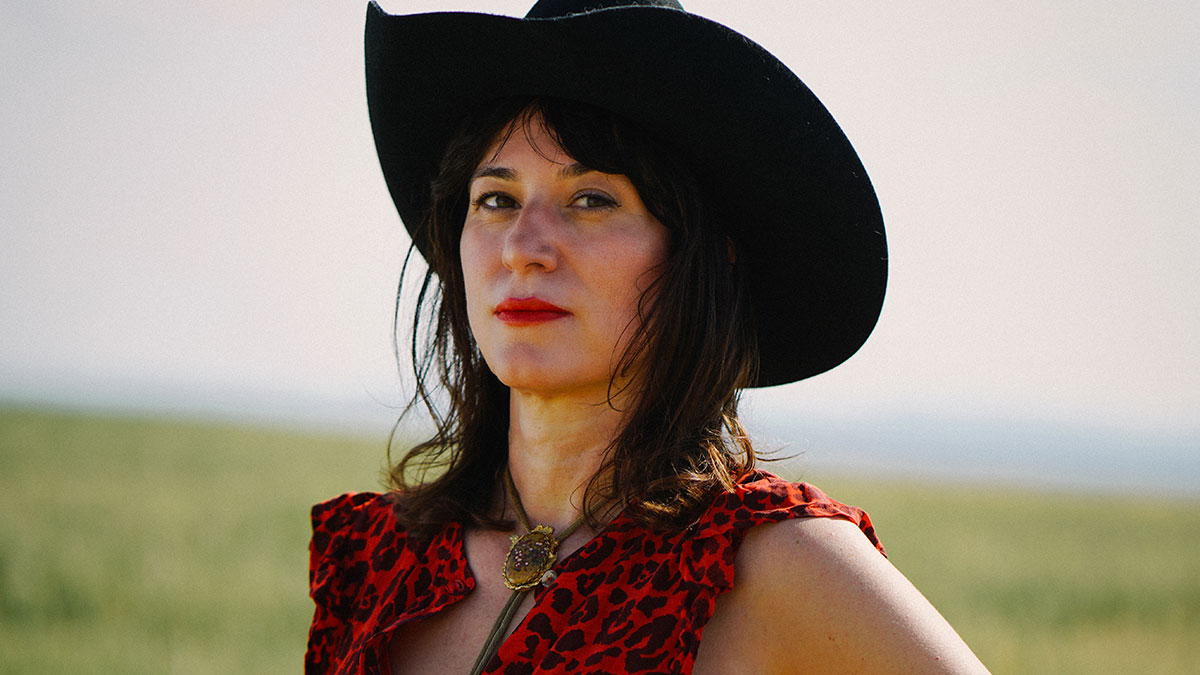
For Dragana Jurišić, Harry Jackson is not merely a forgotten filmmaker and photographer from Bijeljina. He was a friend of her father, a man who introduced her family to photography and art, and who, as she puts it, "gave her an alibi to dream." The news that Harry had been killed at the beginning of the war remained in her memory as one of the first major traumas. Decades later, she set out to discover what had actually happened to him. That quest evolved into the film “The Balkan Cowboy”, which was screened in competition at the 27th Mediterranean Film Festival in Široki Brijeg.
To begin with, who was Harry Jackson for you and what attracted you to his films so much that you decided to recreate one of them?
A director and photographer from Bijeljina, Harry Jackson was one of the reasons I became an artist. He was my father’s friend and taught him photography, and I am a photographer today and, more recently, a director. Harry gave me the license to dream. When the war broke out in Bijeljina, we heard that Harry had been killed. That was the first time I saw my father cry. Later, we heard that he hadn't been killed after all, but it was very difficult to find out exactly what had happened in 1992. I wanted to solve that mystery. That was the initial idea for the film, but during the creative process, the story became much more nuanced and multi-layered.
You have a strong presence as the filmmaker in this film. You don’t hide the fact that this is not the quest of a neutral observer, but rather your own personal mission. How important was it for you to reveal your own position, including the fact that you left and now live in Ireland?
Nobody is a neutral observer, and I wanted to make that clear from the very beginning. I have already lived in Ireland for 27 years. It was a haven for me until nationalism and protests against immigrants appeared there too in recent years. When I saw thousands of people on one of Dublin’s main streets waving Irish flags and shouting, "Kick them out! Kick them out!", it strongly reminded me of the beginnings of the events in the former Yugoslavia. This story serves partly as a warning. Even more than 30 years after the war, the wounds are still fresh, and people still carry the ghosts of the past, including me.
Since the beginning of the war, Bijeljina has undergone immense demographic and social change. When you returned and began filming, how familiar was the city to you, and to what extent did you feel like a stranger in your own hometown?
I am not originally from Bijeljina, but the city was significant to me because of Harry and the connection to my father. Bijeljina experienced a relatively rapid demographic expansion, growing from 30,000 inhabitants to over 100,000. The town's demographics changed drastically. Before the war, the population was predominantly Bosniak, whereas today they make up less than five percent. The majority of the population consists of Serb refugees who arrived from other parts of Bosnia and Croatia. In short, it is a new city with new people.
You mentioned that many people living in Bijeljina today do not have roots in the city. Were you interested in whether they could even accept Harry Jackson as part of their heritage, a man belonging to a different, pre-war Bijeljina? Did they even know who he was?
I wondered if the new residents knew about Harry, a legend of old Bijeljina. And I wondered if the town, mostly composed of relatively new residents, would rally again in Harry's spirit to make a western in his style. What I discovered while filming “The Balkan Cowboy” was that the people of Bijeljina and Semberija today would indeed turn out in large numbers to help create a Western in his style. They would act, build sets, bring horses, and perform stunts. They would collaborate, regardless of their backgrounds.
Interestingly, people of diverse backgrounds took part in the reconstruction. Did you realise at some point that filming that western together was becoming a kind of little experiment?
The short Western element in our film resonates with the issues we all faced and still face in the former Yugoslavia: territorialism, brother turning against brother and neighbour against neighbour, and the idea that, after a crime has been committed, there is no going back to the way things were. There is certainly no way back without confronting the past.
The Western is a genre that almost always features a clear division between heroes and villains, between "us" and "them." In a city still living with the consequences of an actual division and war, were you attempting, precisely through this genre, to question just how simple those divisions really are?
The Western is not merely a naive genre but a deeply problematic one, in which violence is often romanticised. Many overlook the fact that the American history celebrated in Westerns is, in reality, the history of a country built on genocide and the displacement of Indigenous peoples. When Jusuf Trbić interviewed Harry for Slobodna Bosnia in 1991, he asked him: "If Harry the avenger rode into our region from somewhere, who would he challenge to a duel to protect justice and truth?" Harry answered: "I don't know. There are a lot of them. And they won't duel; they shoot in the back. The honour does not exist for them. Today it is almost impossible to determine who is positive and who is negative. And this was known in the Wild West. What is fair in our country? Who can say that? No, the Western has been surpassed, all movies have been surpassed, and life today is more exciting and bloodier than any movie."
Harry used to bring people together around his films, and you, decades later, have brought them together again around his story. Do you think that, in a way, you have given back to him what he once gave to Bijeljina – a reason for people to dream together?
Everyone we met in Bijeljina was kind and generous to our film crew, which came from Ireland, Croatia, Serbia, Australia, and the Republic of Srpska. Our actors and collaborators poured their hearts and souls into making this film. Some of them might never have met or spent time together were it not for this project. I hope that friendships and partnerships have been forged that will endure, despite the divisions created by decades of nationalist propaganda. Division and mistrust are not the values of a healthy society.
The film has already premiered in Sarajevo. What were the initial reactions of the people who were involved in its creation?
A large part of our crew and cast, along with friends and family, travelled from Semberija for the premiere in Sarajevo. Although some found it difficult at times to watch their own traumas unfold on the big screen, they really liked the film and felt it was fair. I hope it will be screened in Bijeljina and spark a discussion about the responsibility of certain individuals for what happened there during the war – a discussion that should have taken place long ago.
The Harry Jackson mural in Bijeljina reads: "Let your dream be your weapon." What is your dream today, and what are you fighting against with it?
My dream is to change the minds of at least a small minority of people who watch this film and happen to be ethno-nationalists. After the premiere in Sarajevo, I heard stories that this actually happened, so all the effort and hard work poured into creating “The Balkan Cowboy” finally felt worthwhile. From the start, this film was conceived as a warning about what happens when you let hatred and fear rule, and as a quest for justice for Harry. In a world where authoritarianism, nationalism, and racism are on the rise, it is important to say: look, this is what happens when such things go unchecked. Hatred is never the way forward. Empathy and cooperation are. Life is too short for hate.